
Bay State Without Beaches
Stories of the Shoreline
Thanks to a generous grant through Mass Humanities’ Expand Massachusetts Stories Program, over the past year Save the Harbor has been gathering personal stories about how coastal climate change is affecting people and communities across Massachusetts.
We believe that lived experience is just as important as scientific data when it comes to understanding climate change. With the help of our participants and their personal stories, portraits, photos, and paintings of our treasured coastline, we hope to promote collective action for protecting the state’s natural resources. Through the resilience and determination of our coastal communities, we can create a new story for generations to come.

David Coffin, Boston Harbor Historian,
“When it comes to climate change, hope is hard; I watched the tides get higher and higher. I watch Long Wharf go underwater 8 to 10 times a year. It’s real. The Seaport is underwater when there is a convergent of the full moon, storm surge, and high tide. I just try to do my bit and keep the conversation alive.”
-
I spent whole summers on an island off the coast of Maine with no electricity, no running water… late 60s, early 70s. It was just boats and swimming -- can’t beat that. When I moved to Massachusetts in the early 80s, I was near the water. I think more and more of Boston Harbor as my office. As someone who gets to take people out on the harbor, I love watching the growth, and I love watching the enjoyment and the joy in the kids now, and maybe I had some small part of that.
When it comes to climate change, hope is hard; I watched the tides get higher and higher. I watch Long Wharf go underwater 8 to 10 times a year. It’s real. The Seaport’s underwater when there is a convergence of the full moon, storm surge, and high tide. I just try to do my bit and keep the conversation alive. On a personal level, I’ve got solar panels. I drive electric.
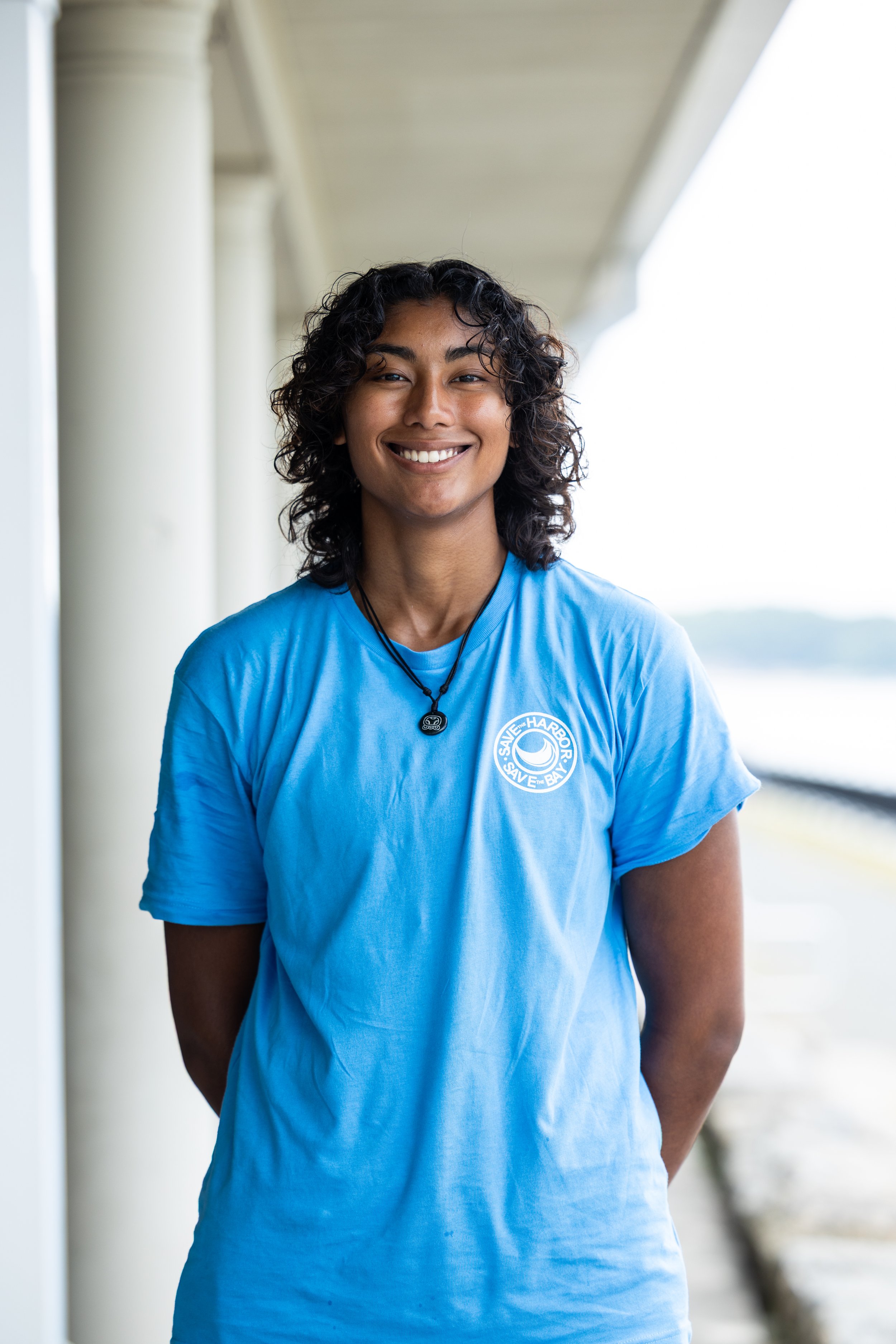
Sofia Francisco, Dorchester Resident
“Climate change is something my friends and I talk about a lot... When it rains hard, Morrissey Boulevard floods pretty badly near my house. I wish there were clearer, more unified messages about what’s happening and what to do. Sometimes it feels like everyone is saying something different.”
-
"This is my first summer with Save the Harbor. I’m working at Camp Harbor View as an L.A., and my favorite part has been watching our junior program assistants grow, seeing them get confident, help kids, and teach them how to fish. The campers’ excitement is contagious.
I didn’t grow up on the islands. I’m from the South End, and until a few years ago I’d only been out once on a fifth-grade field trip. My family got a boat recently, and now one of my favorite things is going out on the channel and seeing the view of the city from the water. It’s really beautiful. Being out there with family and friends makes me feel more connected. I love watching the waves around the pier or at Spectacle’s swimming beach, seeing the waves coming in.
Where I live now in Dorchester, I can walk to Malibu Beach, which feels a lot more accessible than when I lived in the South End. But there are still barriers. I didn’t know about the free All-Access cruises, and most people I know didn’t either. Paying for the ferry can be a hurdle. I didn’t even realize there were ferries to Spectacle Island. And growing up, people said the city’s beaches were dirty, so we’d drive to Revere instead, if you had a car.
Climate change is something my friends and I talk about a lot. Winters don’t feel the same, we used to get snowed into our apartment when I was a kid, and now there might be one or two small snowstorms a year. When it rains hard, Morrissey Boulevard floods pretty badly near my house. I wish there were clearer, more unified messages about what’s happening and what to do. Sometimes it feels like everyone is saying something different.
Looking ahead, I want us to protect the neighborhoods we already have, places like South Dorchester that are on the water, where people are living now. We hear a lot about developing the Seaport, but I’m thinking about making sure existing homes are safe fifty years from today."
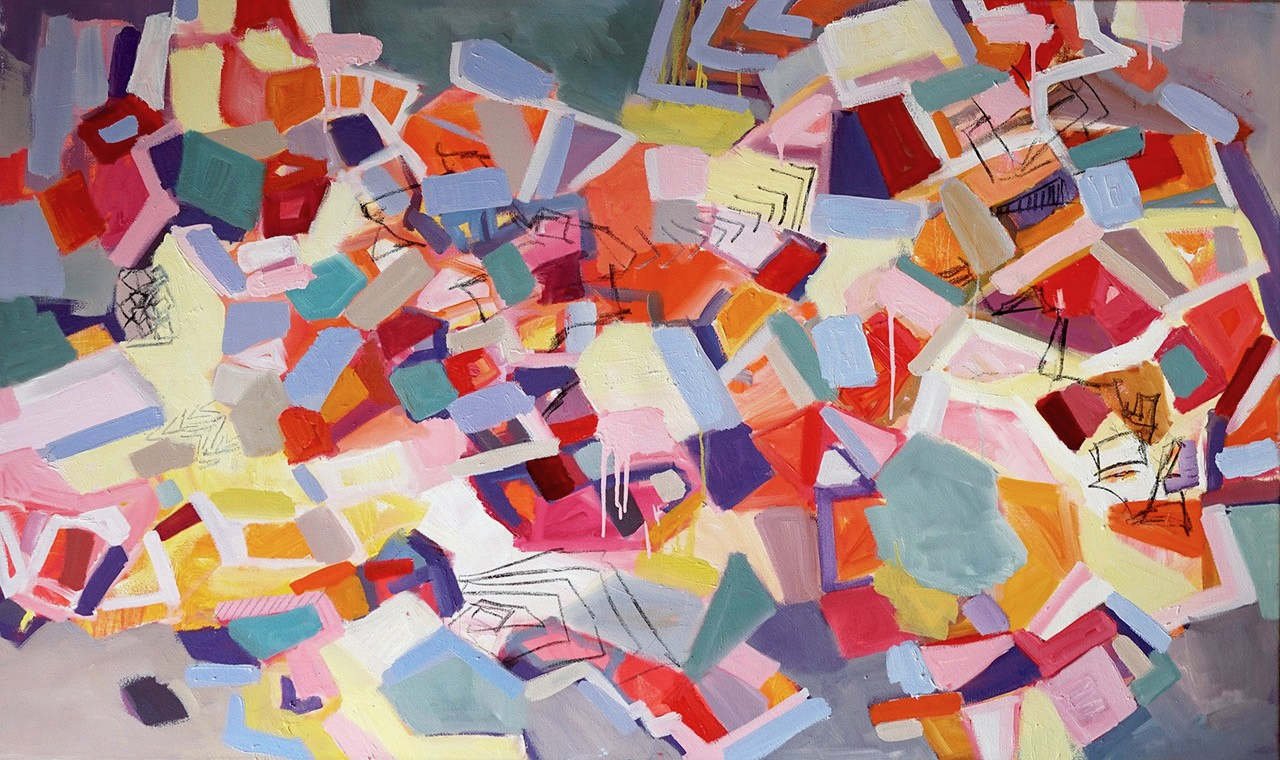
“4.7 Billion”
Nedret Andre
Oil on Canvas, 36”x 60”, 2022
In 4.7 Billion to 30 Billion, I depict a man-made geometric world merging with an exterior of the natural world. I tried to express how the health of our oceans and our health are all connected. Between community efforts, we can provide positive change in Boston.
Boston Harbor had been heavily polluted due to industrial development and population growth since the nineteenth century. By the mid-1970s, organizations within the Boston community started to fight for a cleaner Boston Harbor. In 1972 the Clean Water Act was passed. This led the way for Boston Harbor clean-up, a court mandated action started in 1986. Thanks to all the communities joining forces, we now enjoy clean waters where seagrass has returned to Boston Harbor.
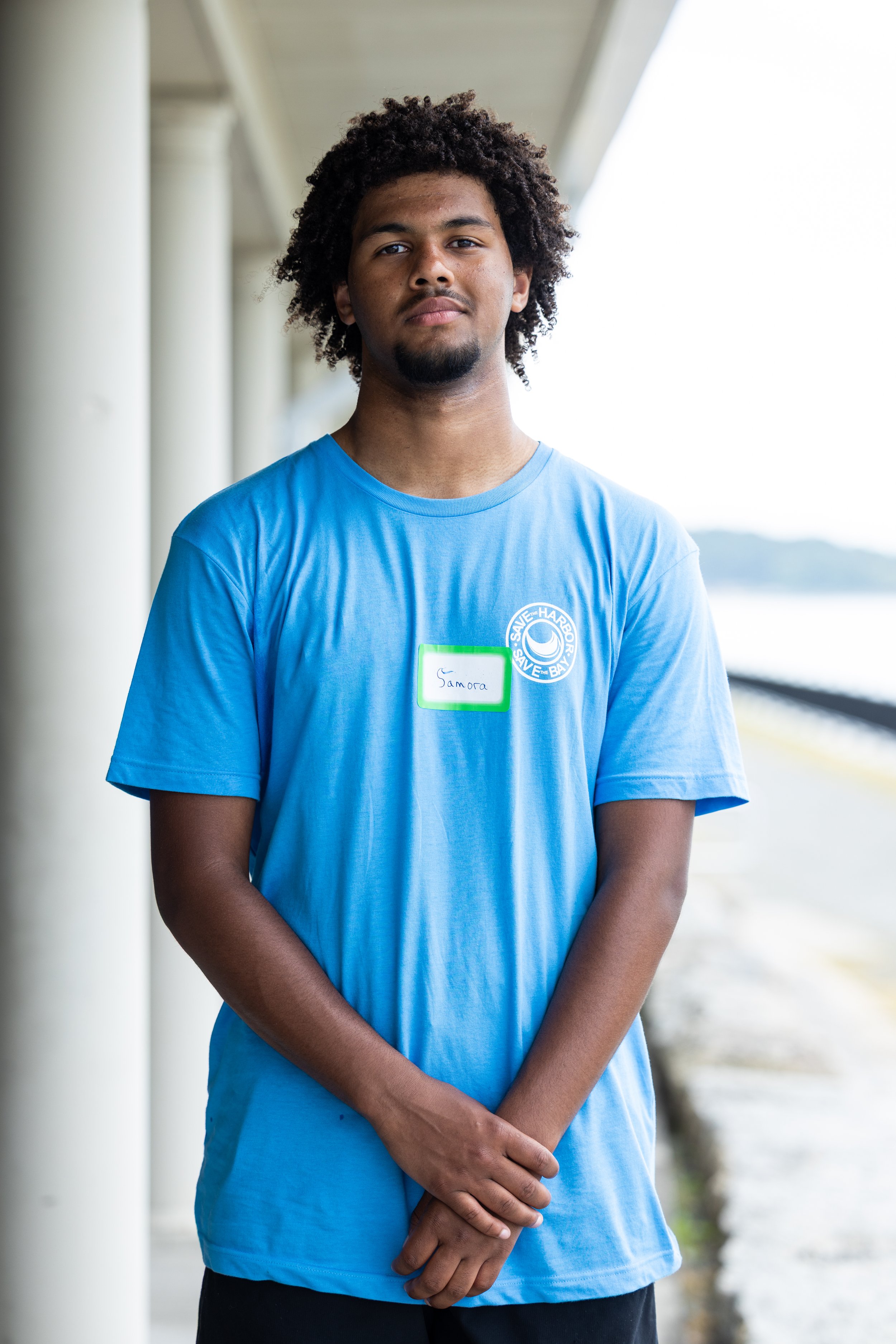
Samora Nogueira Sanca, East Boston
“I live pretty much right on the water. The backside of my neighborhood gets flooded a lot because it’s right on a marsh. During high tides, our marshland floods easily. At Constitution, I feel like sea level has risen over time, I used to be able to go out farther than I can now.
We don’t really talk about fixing it much. I think sometimes we push it to the “higher-ups,” when there are smaller things we could do.”
-
"This is my first summer with Save the Harbor. I’m learning to fish, fishing a lot, and meeting new people, creating relationships I wouldn’t have if I hadn’t come here.
Growing up, I’d walk the East Boston Greenway and go down to Piers Park a lot. I’m at Constitution Beach a lot, too. Being by the water feels different, it’s better for the body than being inside. It’s calming. You hear the waves, hear people playing, just observing, or having fun yourself.
In my neighborhood we have good access to the waterfront, the Greenway, lots of parks and open spaces, and Constitution Beach is the main beach in East Boston. They’ve installed accessibility mats there, and the T and buses are close.
I live pretty much right on the water. The backside of my neighborhood gets flooded a lot because it’s right on a marsh. During high tides, our marshland floods easily. At Constitution, I feel like sea level has risen over time, I used to be able to go out farther than I can now.
We don’t really talk about fixing it much. I think sometimes we push it to the “higher-ups,” when there are smaller things we could do.
For the future, we should help maintain our beaches as the sea level rises, maybe build sea walls in some places, reduce our carbon footprints, and add more green spaces around the harbor. We could use Deer Island even better, sometimes it smells really bad there, so clean it up to make it even better. There are a lot of open, empty parking lots, make more green spaces near the courthouse and the Boston Harbor Hotel."
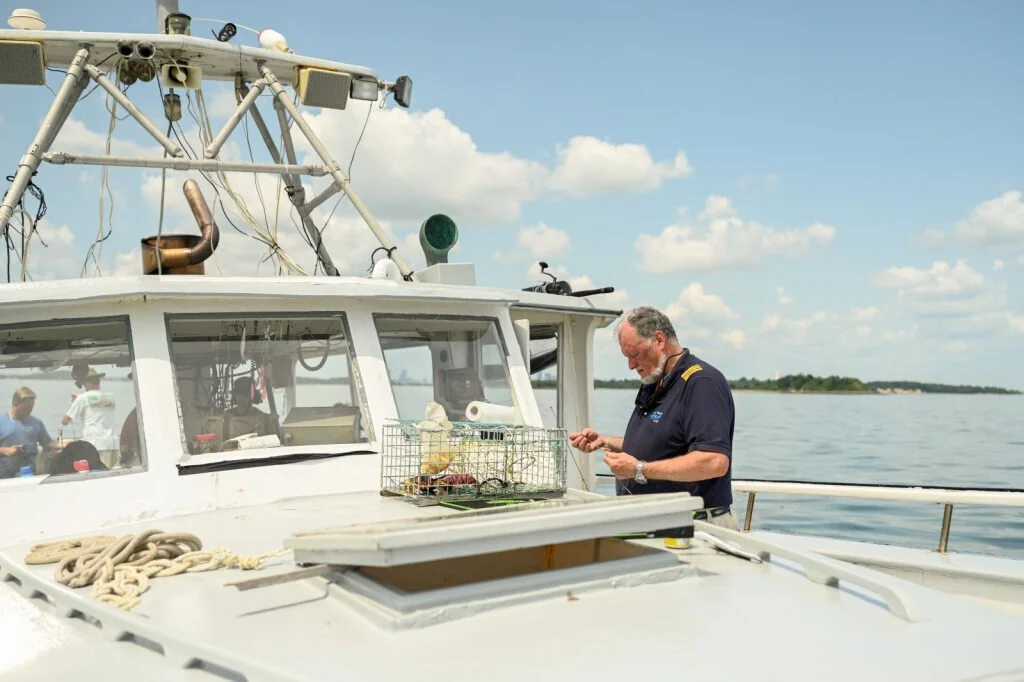
Captain Charlie Gibbons, Boston Fun Cruises
“The harbor's landscape has shifted... What I value has changed with my roles. I’ve been a lobsterman, tugboat crew, tankerman, and into the wheelhouse.
I’ve spent a lifetime on this water, through change and comeback. The work evolves, the harbor evolves, and the kids keep it lively. When a child who’s never been on a boat drops a line and feels that first bite, the whole place makes sense again.”
-
“I’ve been out here a long time. Before it was a job, I went on the harbor with my uncle, like Young Mike does now. One of my first real jobs was working the back of a lobster boat.
The harbor’s landscape has shifted. The Seaport is built up, Spectacle Island was reshaped with fill, but the big change is how much cleaner the water is because of the Deer Island treatment plant. You can feel that difference every day.
What I value has changed with my roles. I’ve been a lobsterman, tugboat crew, tankerman, and into the wheelhouse. Winters, when fishing slowed, I upgraded my license and moved from deckhand to tow boats, the tugs that bring the big ships in so they can navigate the harbor. These days my favorite work is entertaining kids (and sometimes adults in the evenings), getting rods in hands and seeing that first tug on the line.
Last year we even had a whale inside the harbor. Some of those kids had never seen a seagull before, and there they were, staring at a whale. That was special.
People ask about getting into maritime work. We need more young people on the water. There are lots of entry and mid-level jobs, you can start at the bottom and work up. Maritime colleges are great, but many grads aim straight for big-ship captain tracks. There’s plenty of meaningful work on smaller boats, too.
I started as a teenager, saved enough to buy my own 40-foot boat, and ran 800 traps, a serious operation. I’ve caught just about everything: mackerel, flounder, cod, hake. These days, for pure catching, I like black sea bass; they’re abundant. Flounder have faded from overfishing. Striped bass are a terrific sport fish, but with kids I avoid them, treble hooks are dangerous, and one striper can tangle twenty lines.
We fish smart, watch the sounder, time the drift, drop on the marks. Under the Tobin Bridge, where the Mystic and Chelsea rivers meet, menhaden and river herring stack up; it’s rich bait and the stripers know it. Half the job is teaching: how to bait a hook right (like a sock), keep reels oriented so the handles don’t spin off, bounce bottom without snagging. You can see confidence build, cast by cast.
Where’s the harbor headed? On the right track. Conservation is everything, if everyone sticks by the rules. I’d like to see more access to the islands. It’s a shame that, after all the investment on Spectacle, the small-boat dockage is gone. We could do better there.
I’ve spent a lifetime on this water, through change and comeback. The work evolves, the harbor evolves, and the kids keep it lively. When a child who’s never been on a boat drops a line and feels that first bite, the whole place makes sense again.”
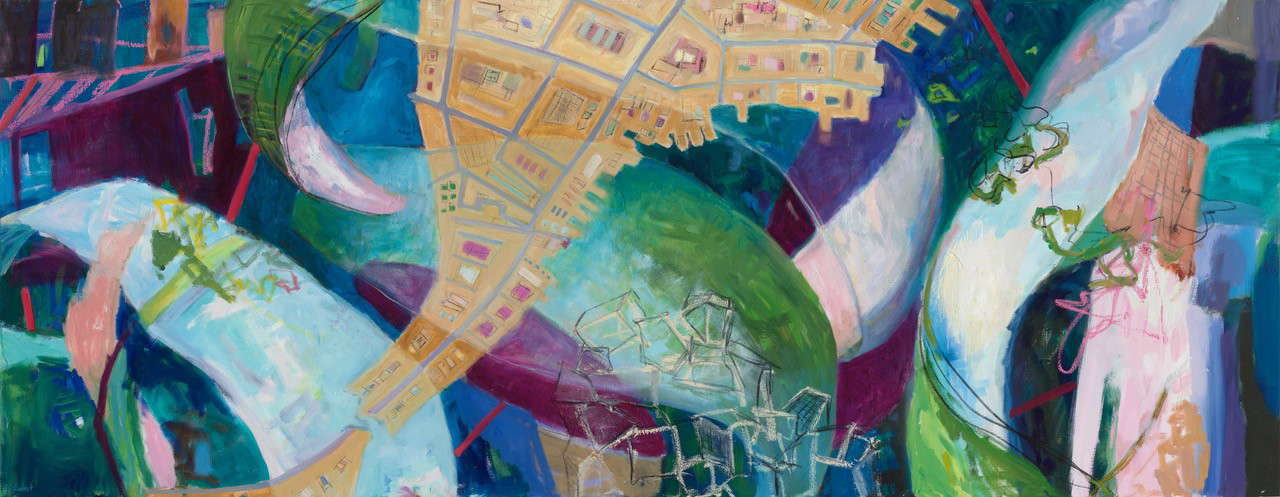
“Resilient Boston”
Nedret Andre
Oil on Canvas, 34” x 88”, 2020
Resilient Boston depicts a Boston that looks at the past yet focuses on the future. It is a visual story about seagrass and our connection with nature. The painting is based on a circular axis to represent the circle of life. The seagrass overlays are both transparent and opaque to reference its transitory history. Below the map viewers can see images of the envisioned modular units in the foreground, symbolizing our ability to adapt to climate change.
I was fascinated with a 1775 “Town of Boston” from Lieutenant Page’s map. His image of Boston which shows how my studio in the South End, was oceanfront before Boston’s expansion. Eelgrass was thriving in clean water and the fish were abundant. As Boston expanded and got filled in, the edge of our shores changed. The seagrass in the 1980’s had almost completely disappeared in the harbor due to pollution and run-off. The community came together to find a solution. The waste management was moved to Deer Island in 2000, and they upgraded their treatment to counter the effects of excess nutrients. Today we see cleaner water in our harbor and the seagrass reemerging, allowing life to come back to our shores.
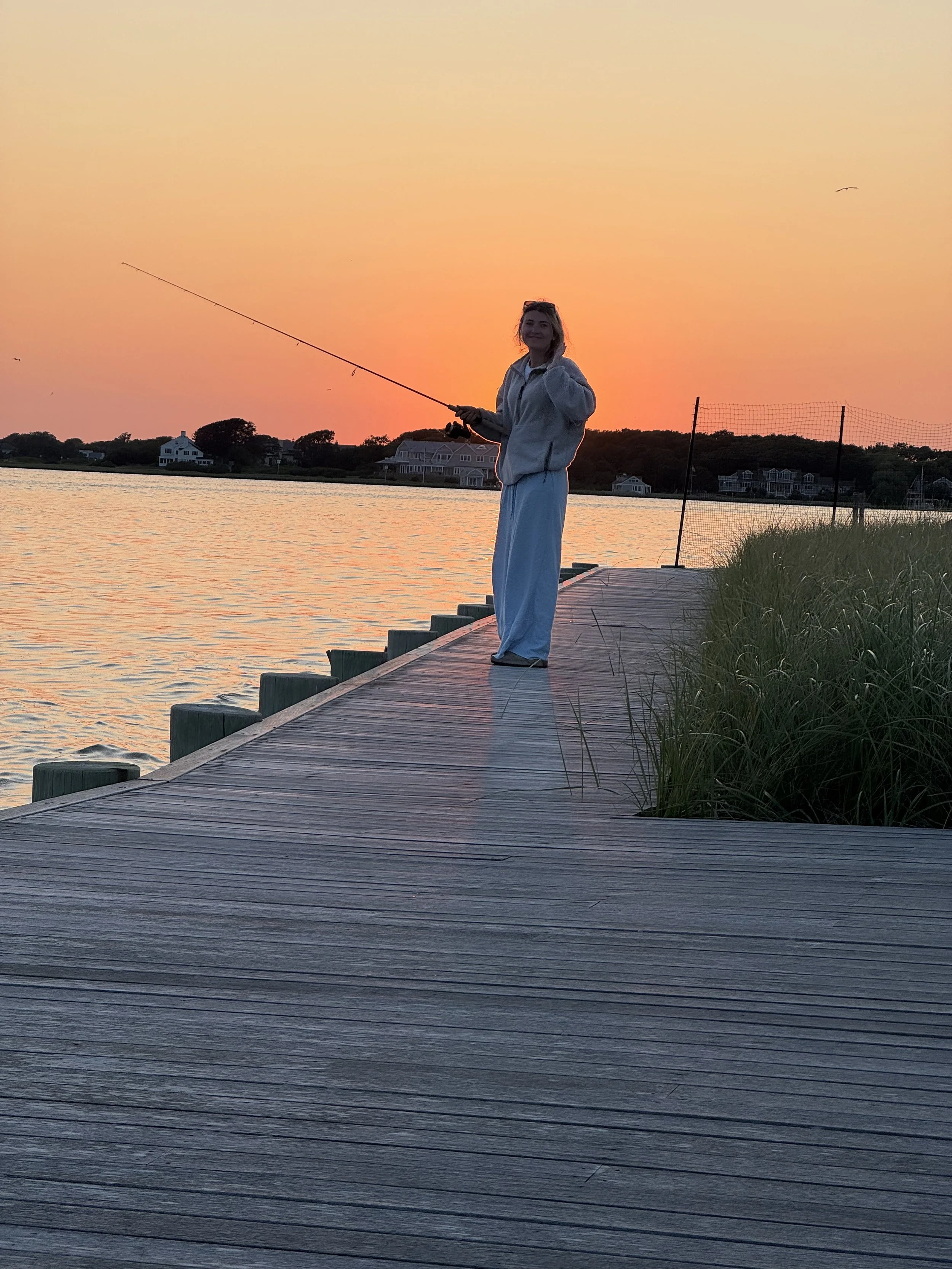
Kerrin Cleary, South Boston Resident
“I teach kids a lot about the ocean and the bay, and I’ve noticed that climate change has a big impact on what I do. Summers are hotter, kids say it, and they feel it, and more tropical species have been coming up and washing up on our shores.”
-
“I love the water. I grew up five minutes from the beach. My whole life I’ve been around the ocean, surf instructor, lifeguard; always outside, always on the water. I still associate the ocean with happiness and being able to have fun outside. My first time surfing was in fourth grade with my dad, because he surfs. I was on a foam top, ate it, but it was awesome.
Now I’m an environmental educator. I teach kids a lot about the ocean and the bay, and I’ve noticed that climate change has a big impact on what I do. Summers are hotter, kids say it, and they feel it, and more tropical species have been coming up and washing up on our shores.
I also volunteer through a program called AMCs, and we do necropsies on washed-up animals. I started two years ago. On weekends I’d get an email, humpback whale washed up, and I’d drive to wherever it was, clear the beach, get the saws and chainsaws, and help open them. We measure, record weight and sex, and document what we find. The past two summers we’ve had a lot more tropical species wash up. The causes we hear about are often tied to warmer waters. It’s really bad. Climate change is bad.
Inside stomachs, there are wild finds-- too often, garbage. I’ve seen an eel in a shark’s stomach full of trash. Human impact on species shows up in what washes ashore and in what’s inside.
With kids, I try to turn worry into curiosity and action. They’re more interested in solutions than I was at their age. I talk about the offshore wind turbines being built. I love having them picture how far out they’d be, hold your thumb up, the top of your thumb, that far on the horizon. They don’t want to waste energy. They want clean energy. They already know about wind and solar. That’s super cool.
I love the water. I’ve always grown up around it. Teaching kids and doing necropsies keeps the conversation alive, about what we love, what we’re losing, and what we can do next. We all have a part: learn, notice, measure, bring your trash back, choose cleaner energy, and protect the shoreline so there’s still a beach for the next fourth grader to catch that first wave.”
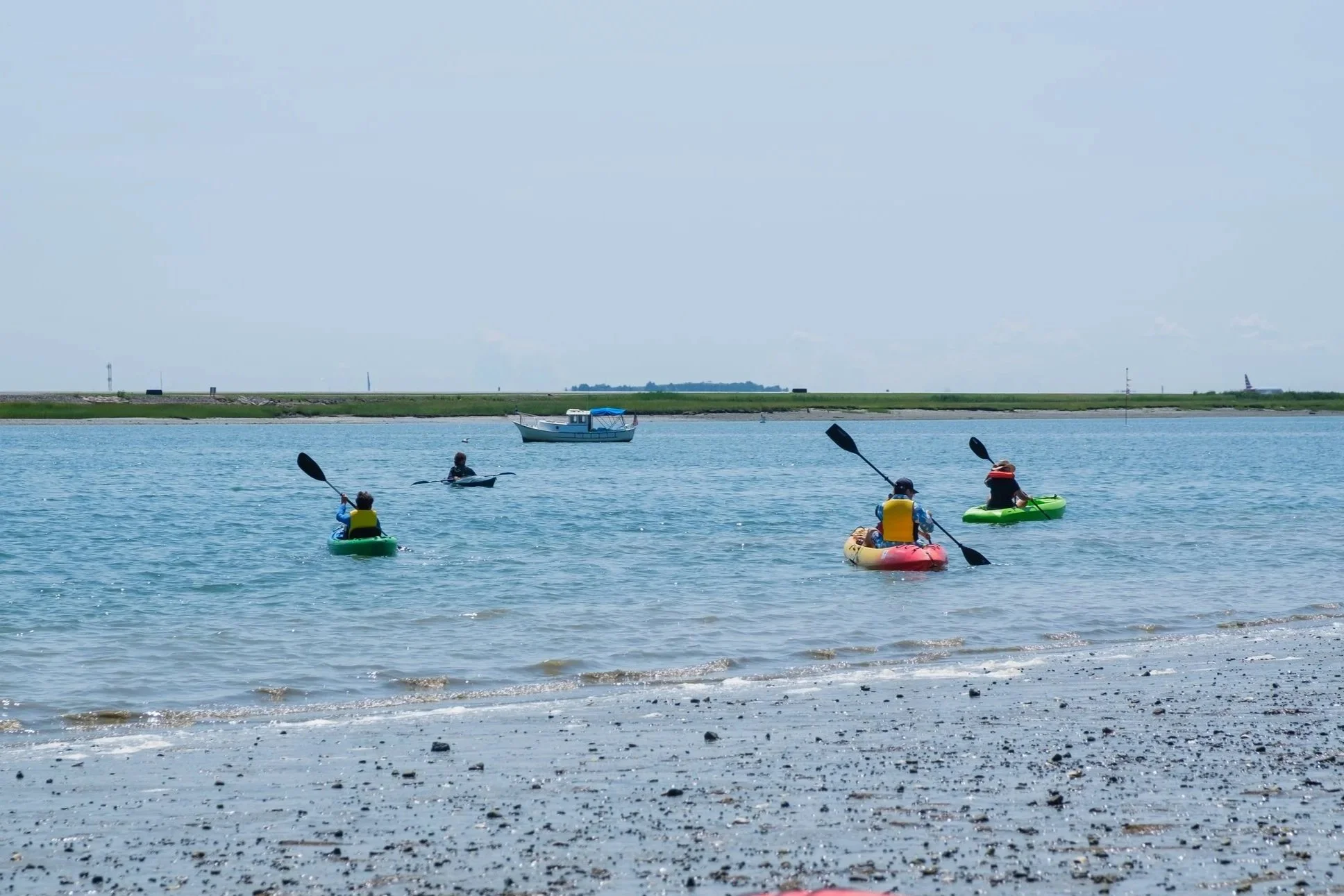
Carolyn Lewenberg, Artist
“I think about the collective cultural inheritance of our coastal environment - full of wreckage, treasures, and everything in-between, ready for renewal, a new season, new cycles, and growth. I imagine what the shoreline was like when it was well cared for by the original indigenous inhabitants of the land and waterways who were deeply interconnected with all the plants and creatures who they shared it with.
As our shorelines recover from generations of extraction and dumping and still continue to be mistreated alongside conservation and restoration efforts, I think about how I am a bridge between the past and the future.”
-
“I’ve always been drawn to ruins, scraps, and other evidence of once whole objects, structures or garments. I would, and still do, imagine what once was, and find joy playing with what's left, with a wisp of feeling sadness and loss. As a kid, my family would visit the Harbor Islands and explore the decaying forts and pick berries. On Peddock’s Island, there was an old vehicle tucked between two buildings, a building that we would enter through a broken window that had an elevator in it, streetlights still standing between norway maples that had grown so close to them that the streetpoles seemed to just be part of the stand of trees. There was an ancient seeming fire hydrant squatting lonely in front of one of the overgrown buildings. The berries were further down on the ocean side of the island where the disappearing gun emplacement ruins were - giant rings hung on tall concrete walls that once had big ropes or cables threaded through them to raise the barrels of the guns over the walls, and the recoil of the shots would force them back down into place behind the wall to reload them.
Bumpkin Island was the closest to our home in Hull and was the island that my Grandma Sally’s sewing room in the attic of 18 Sunset Ave overlooked. I remember looking for treasures in the attic, being so creeped out by the dress form in her sewing room and also intoxicated by the old wood smell up there. As a kid, my Dad and his friends would sail out to Bumpkin and throw bricks at the crumbling walls of the Burrage Children’s Hospital which had succumbed to fire in 1946 and cheer when bits of walls would come down. It had operated as a hospital for children with physical disabilities from 1902 until World War I, when the island was used by the Navy as a training station. After the war, the hospital reopened for polio patients but was eventually closed during World War II. I was a ranger on Bumpkin Island in 2009 where I attempted to sculpt the sea of bricks from the hospital ruins into paths to showcase sculptures. I had been making giant wheelchairs from the oriental bittersweet vines that had overgrown the island as a point of departure for telling the history of the island as a hospital for disabled children. Lore is that the handicapped ramp was invented on Bumpkin Island. However, the sea of poison ivy that protected the ruins got the better of my efforts and I spent two weeks with swollen, itchy, and pussing arms and legs. I felt like some kind of a mermaid forced to live on the land, my only relief was being submerged in the salty cool harbor water.
The buttons from my grandmother's sewing room overlooking the harbor eventually made it to me. I imagine that she had inherited buttons from her grandmothers who likely also inherited buttons from their mothers and grandmothers. This Fall, I looked for a button to fix my kiddo’s sportcoat which they were excited to wear to “dress to impress” day at the school’s spirit week, and I realized that a lot of the old white buttons are made out of shells, which would be the perfect material for the shoreline texture that I was creating in the collage that would become Shoreline Inheritance. I began sorting through the buttons to separate the shell buttons and I found many glimpses into the lives of my ancestors: an Army uniform button from my Great Uncle, WWII ration tokens, a coin from Austria from 1851.
I had initially conceived of Shoreline Inheritance as a post-apocalyptic take on a traditional landscape/seascape, and then the whole button experience made it a lot more personal. I thought about the women who came before me who fixed clothing and made clothing. How they saw the beauty in such small things and saved them in tin after tin of buttons of all colors, shapes, sizes and materials. I love the idea of returning the shell buttons to the shoreline in this piece. I imagine the thousands of buttons that fell off of people’s garments into the sea over thousands of years washed up on this imaginary shoreline.
I think about the collective cultural inheritance of our coastal environment - full of wreckage, treasures, and everything in-between, ready for renewal, a new season, new cycles, and growth. I imagine what the shoreline was like when it was well cared for by the original indigenous inhabitants of the land and waterways who were deeply interconnected with all the plants and creatures who they shared it with. As our shorelines recover from generations of extraction and dumping and still continue to be mistreated alongside conservation and restoration efforts, I think about how I am a bridge between the past and the future. In my lifetime I cannot recreate a whole landscape that took generations to establish balance and biodiversity, nor can I recreate a lineage that is rooted in reciprocal relationship with the land as the capitalist systems has been and continues to function on systems of extraction. As I struggle to create beauty from the scraps of my familial and cultural inheritance, my wish is that my engagement with the land and people who care for it inspires the next generation to center care and active engagement in our land, waterways, and communities.
Shoreline Inheritance incorporates scraps from past and present to depict an adventure with my kiddo and friends on the spit between Squantum and Thompson Island where a small boat had become grounded ashore and abandoned, its wreckage colored by various tones of greens and browns of marine decay. I’ve reconstructed the memory of the children playing on the mini shipwreck with scraps from old art projects and construction projects on my street, a straw mat which I used to lay on at the beach, blinds I got from the trash, garlic stems from my garden, motherwort from a raised bed in the Southwest Corridor Park, thin veneer wood from a friend in Upstate New York, and of course, buttons. The children are lasercut from a thin piece of wood that was the backing of a print that came out of the attic in Hull overlooking the Harbor, presumably from my great grandparents, as the print was produced between 1834 and 1907.”
“Nobody's Nomads, nowhere to swim, nowhere to thrive”
Karen Lee Sobol
Watercolor and ink on cotton, 44" x 65", 2020
Early in 2020 as Covid-19 set in, I set up an impromptu painting studio at home. Usually I paint like I swim: total immersion, and lots of splashing. Working at home, though, I needed to be neater, so with crayons, Sharpies, watercolors, and inks, I chose to draw rather than paint. A large piece of cotton perfectly fit my work table. Its center fold referenced the equator,
and from that starting point images of hemispheres and life forms appeared. Nobody's Nomads, nowhere to swim, nowhere to thrive emerged. It launched my ongoing Nobody's Nomads series. As the global climate crisis claws at shorelines and disrupts nature's balance, Nobody's Nomads aims to inspire empathy and motivate stewardship for our precious planet.

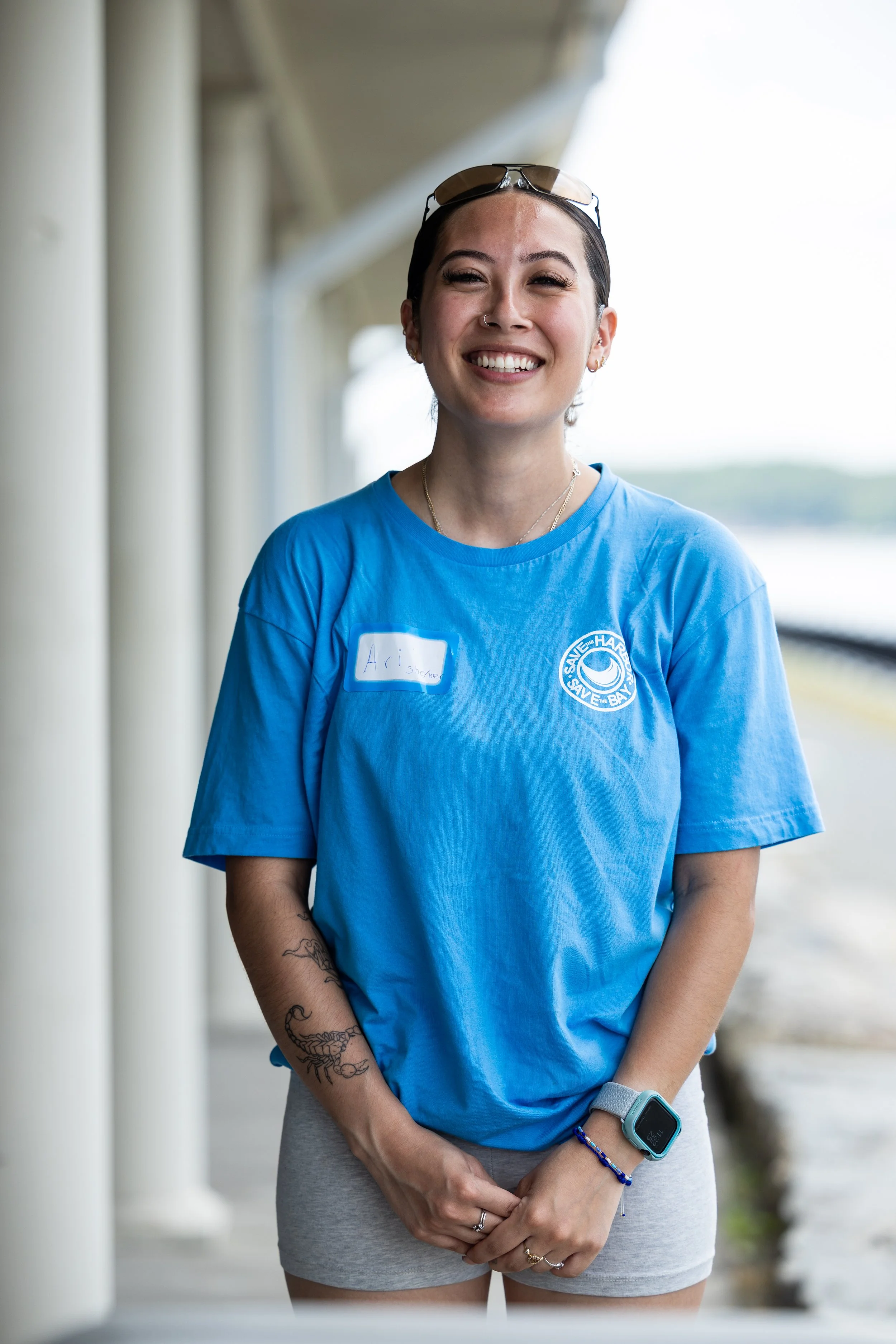
Ari Alarcon, Charlestown Resident
“I think the people I interact with have a good understanding of climate change, how it can negatively impact spaces, and how drastically things can change. Especially during the summer, you can really feel it through the heat emergencies. People understand the impacts but are trying to figure out how to help and how to give back, to make an impact.
The heat emergencies are worrisome. At the camp, if it's too hot, they have to cancel and kids lose a day outside. In terms of fishing, there are times where we catch a whole bunch of stuff and then there are days when we find nothing but trash in the water.”
-
“When I first joined Save the Harbor, I knew less about what's in the harbor, if it's clean or not, and I had only been to Spectacle and Georges Islands. I’d never been to Long Island or Peddocks Island before.
Being on the harbor, I get to disconnect from everything, be in my own space and be one with nature, which is really nice. I get to teach others, I get to give back.
I think the people I interact with have a good understanding of climate change, how it can negatively impact spaces, and how drastically things can change. Especially during the summer, you can really feel it through the heat emergencies. People understand the impacts but are trying to figure out how to help and how to give back, to make an impact.
The heat emergencies are worrisome. At the camp, if it's too hot, they have to cancel and kids lose a day outside. In terms of fishing, there are times where we catch a whole bunch of stuff and then there are days when we find nothing but trash in the water.
I feel like places should prepare for sea levels rising. In the North End, there are tally marks that show where the water will go up to one day.
I'm excited to see what changes and what ways people think about making new buildings or more opportunities for people to visit the islands. I don't think a lot of people know about the free opportunities on the water, and I think that's something more people should know, and we should raise awareness.”
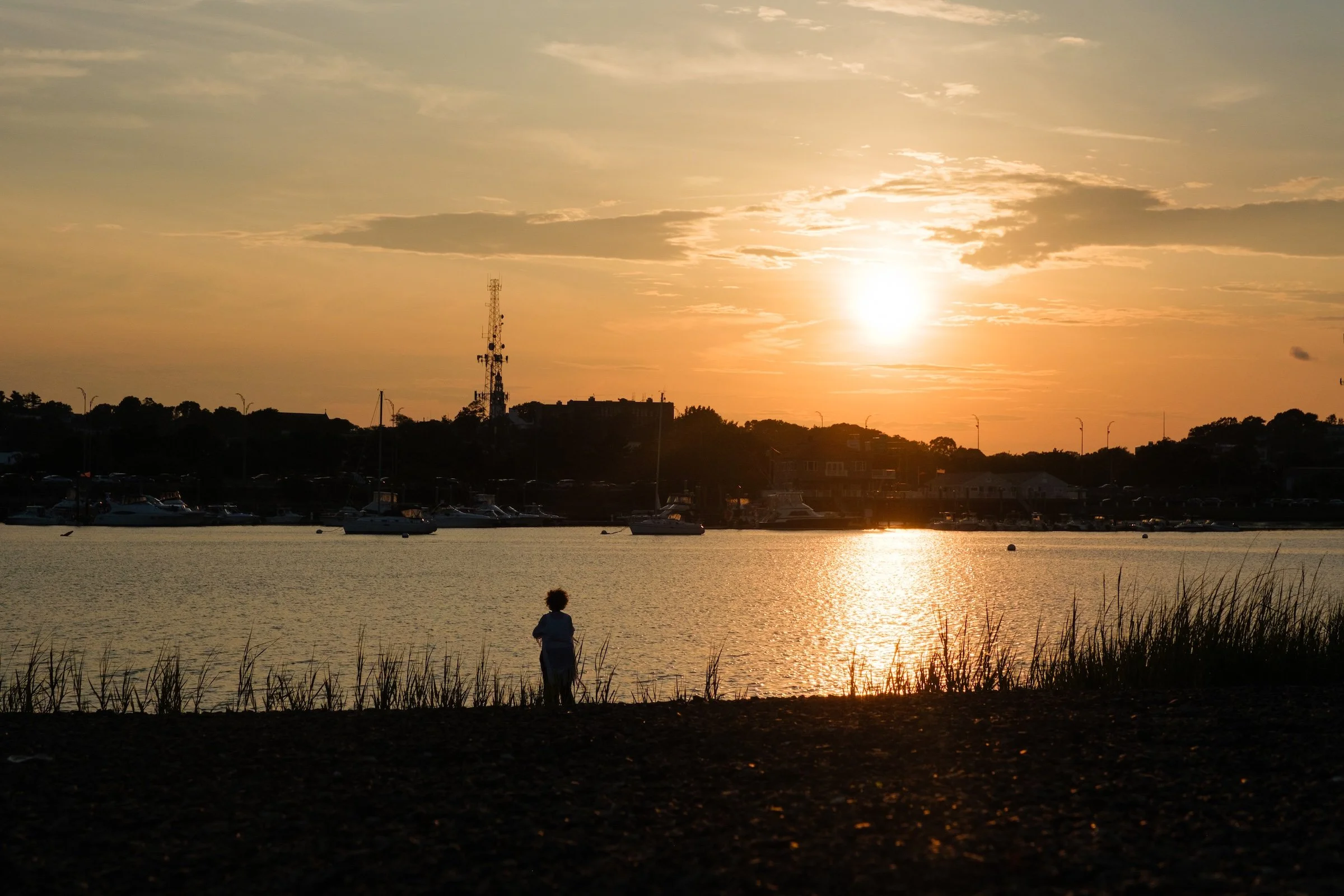
Doug Marsden, DCR Ranger
“[The Boston Harbor clean-up] is nothing shy of a miracle, and it gives me hope.
I understand the great concerns about climate change, but for me, my experience directly: anything can be fixed with enough effort and desire.
You can turn absolute abominations into thriving ecosystems. The concern should be there, but the hope should be there as well. I’m going to remain optimistic and hopeful. The changes I’ve seen in my lifetime are astounding.”
-
“It is unseasonably hot.
Hi, I’m Doug Marsden. This is my third year out in the Boston Harbor Islands working with DCR. I am what’s called a VSS. That is a Visitor Service Supervisor. I’m in my late 60s, and one day on a whim, I decided to take the ferry, I had been retired for about 9 months, but I don’t sit still well. On the ferry I saw they were hiring, and I had my resume on my phone and just sent off the application on my phone as a joke, and next thing I knew they called me, and I’m a deckhand.
One day we’re heading into Long Wharf, and there were three people on the dock without tickets. So I’m out there stopping them from boarding and then the captain over the loud horn goes, “Doug, they’re with Department of Conservation and Recreation (DCR) we have a relationship with them, you can let them on board,” and it turned out one of them was the director of DCR. Once we were on the boat, she said “I’ve seen you. You’re really good with people. Did you ever think about working with DCR?” Next year I put in the application, interviewed, and I’m out at Georges Island learning about the history of the Boston Harbor Islands and all the incredible stories. I work from the beginning of May, and I will finish up after the first week of October. I meet all kinds of people. Everybody wants to be here so everybody is in a good mood. Kids from the city that have never been on a boat before, and now they’re on an island, now they’re down by the water, now they’re seeing things they never get to see. They light up!
I’m a native Bostonian. I grew up right over on that beach over there, by Carson Beach. I spent my childhood out there. The ocean was always, always there. The ocean was the playground, no Nintendo, just sandcastles, fishing, figuring out how to have fun with little to nothing.
I’m a saltwater person. I loved the smell of it. I’ve traveled a lot, extensively, and I was always near the ocean. I just have an affinity. I love salt water. I tend to believe in the healing powers of the ocean, the salt water.
I knew of the Harbor Islands as a small boy. They took us out here and just let us run wild. It was magical. I had not been back to Georges since I was 13, and my first time back, I was in my 60s, and I was thrilled and pleased and amazed at the actual history.
Boston Harbor is a gift. It is unlike any harbor in the continental United States. We have 34 islands in this harbor alone. It is such a resource, such a gift. It’s helping people understand the importance of the environment and nature and how to nurture things and not leave garbage and pick things up and take things with you. There’s a new generation; there’s life even on this island.
Here on Spectacle, when I was a small child in the early 60s, this is where Boston dumped all their garbage here. There are approximately 8 million tons of garbage sitting underneath the island. I remember years of black smoke you couldn’t put out because it burned below. The smell of burning garbage takes me right back to this. Today on Spectacle you and I are looking at beautifully landscaped green pastures and trees and activities. When they were doing the Big Dig, part of Ted Williams' Tunnel, they took that fill and brought it over here. You see these two drumlins and the saddle in the middle. Originally this was two separate islands; they connected the two. They used all of that fill to cap all of the garbage, put clay on top and other drainage, and topped it off with topsoil, planted all this. I think this is one of the most successful ecological comebacks and sustainability in history, second only to Boston Harbor itself.
Time Magazine posted that Boston Harbor was the most polluted harbor in the continental United States. You could literally walk on the harbor. I remember people fishing and catching flounder with big sores. Now, last year here in the Boston Harbor Islands, right in President’s Way, there was a sighting of a whale. Aquatic life has made an unbelievable comeback. You can fish. I’ve seen seals here. Now people see regular runs of stripers and blues. It is one of the biggest ecological comebacks in history.
A lot of it had to do with Deer Island. Waste was basically just being pumped right out into the harbor itself, barely treated. Now you’ve got the Deer Island treatment plant that treats, I don’t know how many million GPD per day. The methane created they keep in those big eggs that you see. Those are digesters. They capture that methane and they use that to power the plant, so they’re recycling that energy. All of these things combined have made this one of the, if not the best harbor to visit for aquatic life and everything else in the entire continental United States. It’s nothing shy of a miracle, and it gives me hope.
I understand the great concerns about climate change, what’s going on, but for me, my experience directly: anything can be fixed with enough effort and desire. You can turn absolute abominations into thriving ecosystems. The concern should be there, but the hope should be there as well. I’m going to remain optimistic and hopeful. The changes I’ve seen in my lifetime are astounding. I’m not sure if there’s a magic solution. My personal belief is that the change is going to come from a million to a billion individual efforts: don’t run the water while I’m brushing my teeth, try to use reusable containers, turn off the light if you’re not in the room, don’t use the energy. Water is not infinite. It’s finite. Little efforts are going to make a better planet, a more sustainable planet, something for the future. I love it. That’s me, man.”
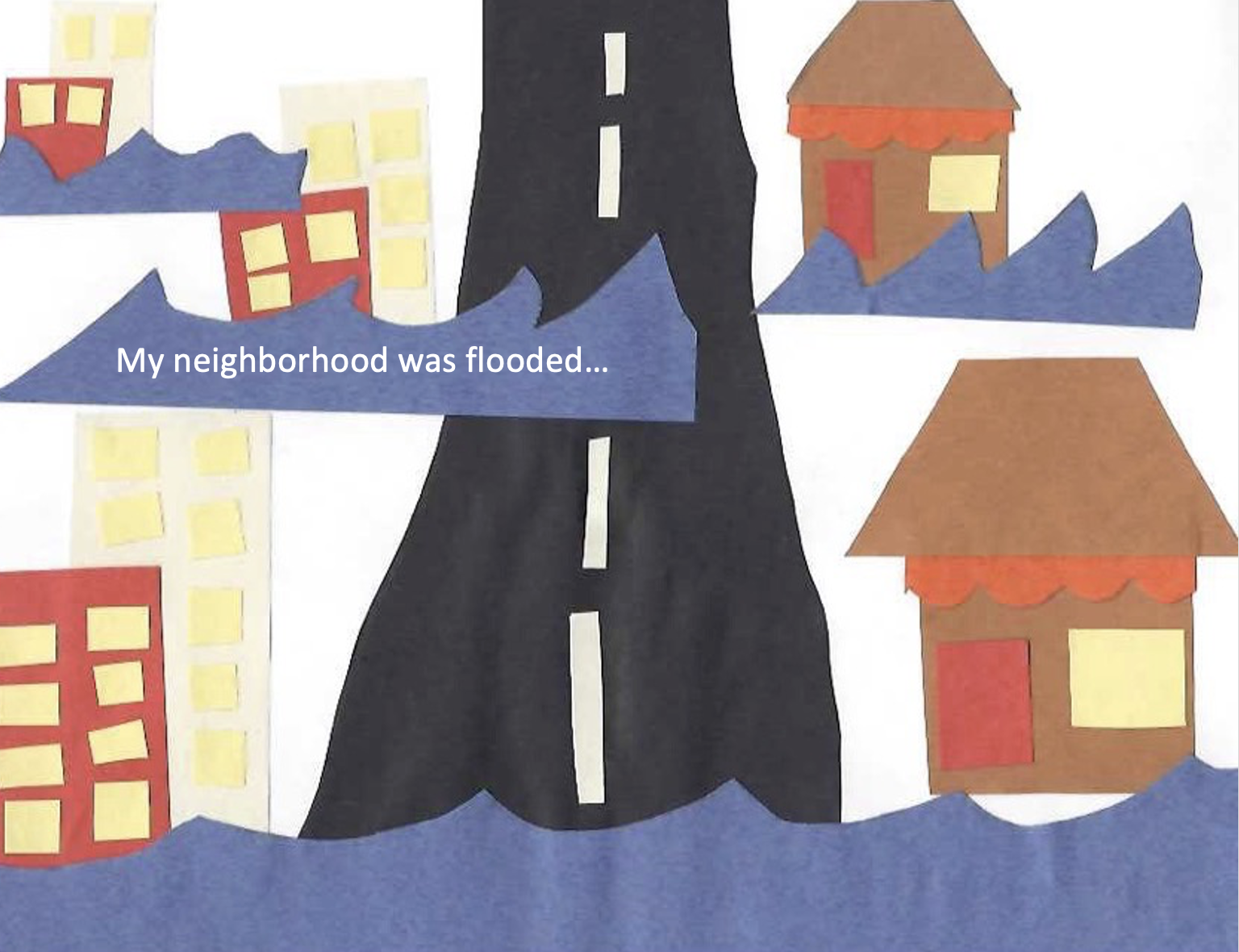
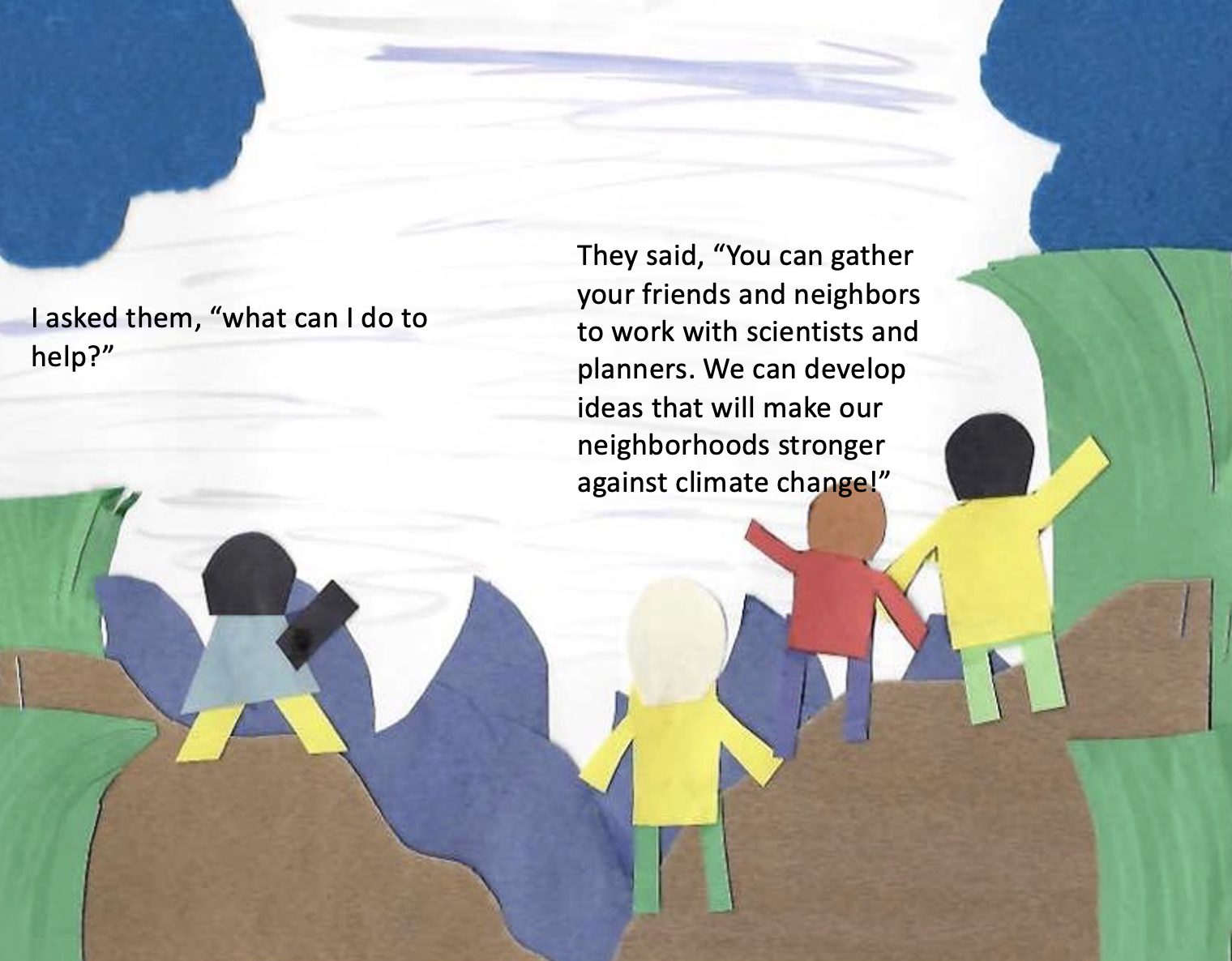
“A Kid's Guide to Planning for Climate Change”
Melissa Roberts, Naturalist/educator/Director of Operations at PUDDLESTOMERS Nature Exploration in Newton
This picture book was designed in a class that specifically required us to create a Sci-Comm product at UMass Boston, School for the Environment. As a screenwriter and an aspiring picture book author, writing picture books about children accessing their agency to participate with their community in making decisions that will impact their resilience, and sustainability was a natural creative step for me to take. This book is designed for ages 8-10 with the goal of engaging the youth to work with their communities to build sustainability and resilience in the face of climate change and extreme weather-related events.
This is the 1st book in a 2-part series. The 2nd environmental planning picture book has the students taking what they have learned from their community and working together to develop green stormwater management to be implemented at their school to mitigate flooding. They are introduced to bioswales, retention pools, and rain gardens. They also learn how the synergy of 2 solutions working together can be impactful.
This book is intended to be used across a variety of programs such as community science programs that engage families in the green spaces in their towns and cities, at preschools where I serve as a science coordinator, and programs with our local Parks and Recreation, Conservation Commissions, and Natural Resources Commission.
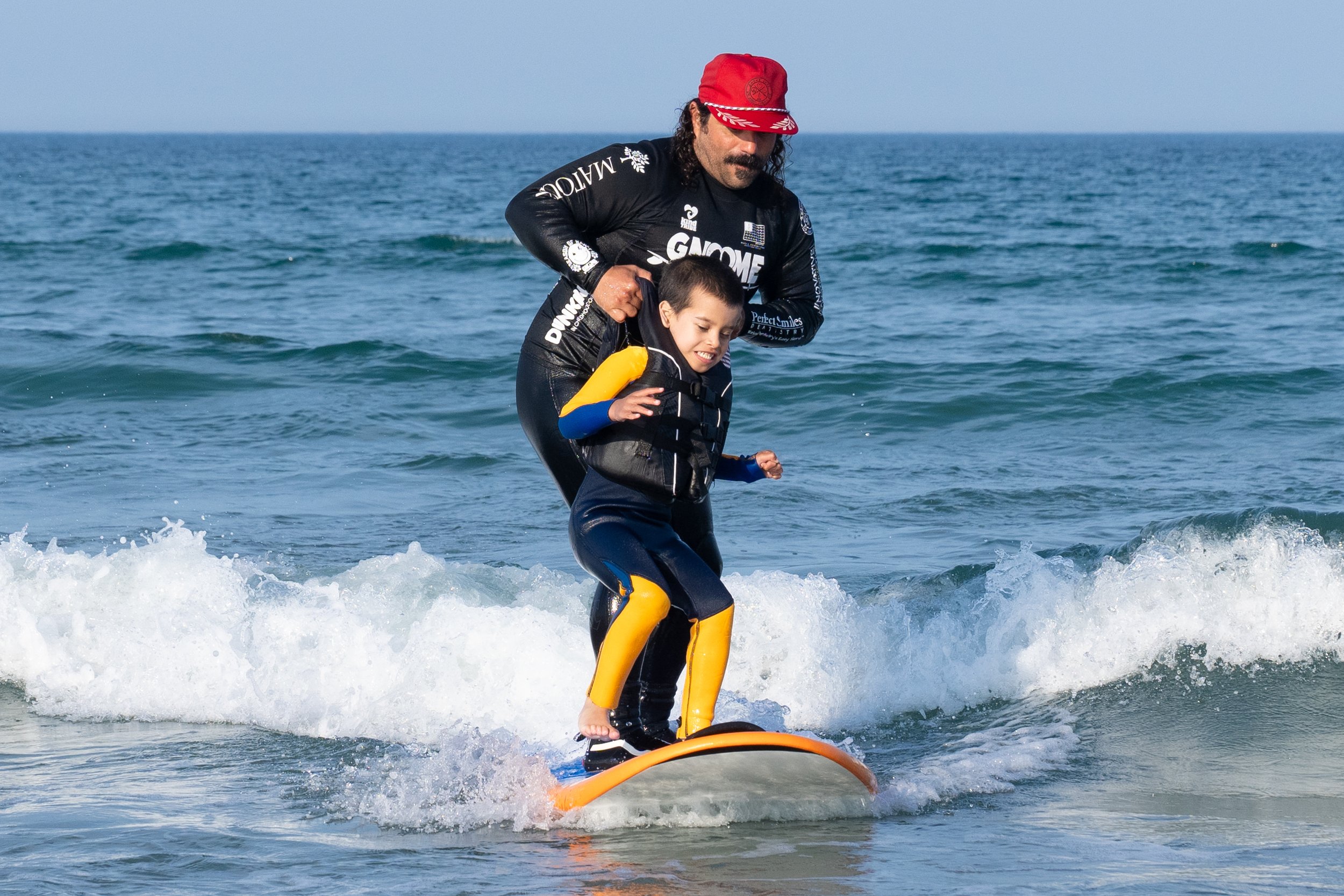
Christopher Antao, Founder of Gnome Surf
“Whether you're a survivor, a dreamer, or someone who just believes in kinder futures, this wave is yours. Together let's turn the tide, because the ocean doesn't care how you got here. It just asks that you rise.”
-
“From Waves to Revolution: a story of breadth belonging and breaking chains
When you grow up feeling like you're too much and not enough all at once, the world becomes a cage for years; I rattled its bars. A kid with undiagnosed ADHD drowning in the chaos of my mind, surviving childhood trauma that morphed into depression and anxiety. I wore masks, the chaotic kid, the over thinker, the one who never quite fit... Until the Ocean. The first time I surfed, I learned what it meant to breathe. Not the shallow gasps of survival, but the deep salty inhales that filled my lungs with purpose.
On board, my scattered mind focused. The roar of the waves quit the noise of not enough. For the first time I felt joy without guilt. I was enough just as I was. That’s why I founded Gnome Surf, a nonprofit where inclusion isn’t just a buzz word, it’s a lifeline. We don’t see autism, down syndrome, ADHD, cerebral palsy, rare diseases, depression, anxiety, limited mobility, or spinal cord injuries as deficits.... We see warriors, kids who paddle out with courage that humbles me. Children who rewrite their stories with every wave they catch. Families who find kinship in salt water and solidarity. But this revolution isn’t just for those who are labeled different; our neurotypical youth are learning to become instructors, mentors, allies, eyes wide open to the strength in diversity. When a 16-year-old teaches a peer with autism how to pop up on a board, they both discover a power they never knew they had.
Surfing taught me that love is the answer, not the Hallmark kind, but the gritty radical kind that says you belong here. The kind that heals trauma, bridges gaps, and builds a world where we are defined by our strengths, not our struggles.
Gnome Surf isn’t a trend. It's a rebellion against exclusion, against pity, against the idea that some lives are less than. We're a global family now, but we are just getting started. I’m asking you whether you're a survivor, a dreamer, or someone who just believes in kinder futures, this wave is yours. Together let’s turn the tide, because the ocean doesn’t care how you got here, it just asks that you rise.”
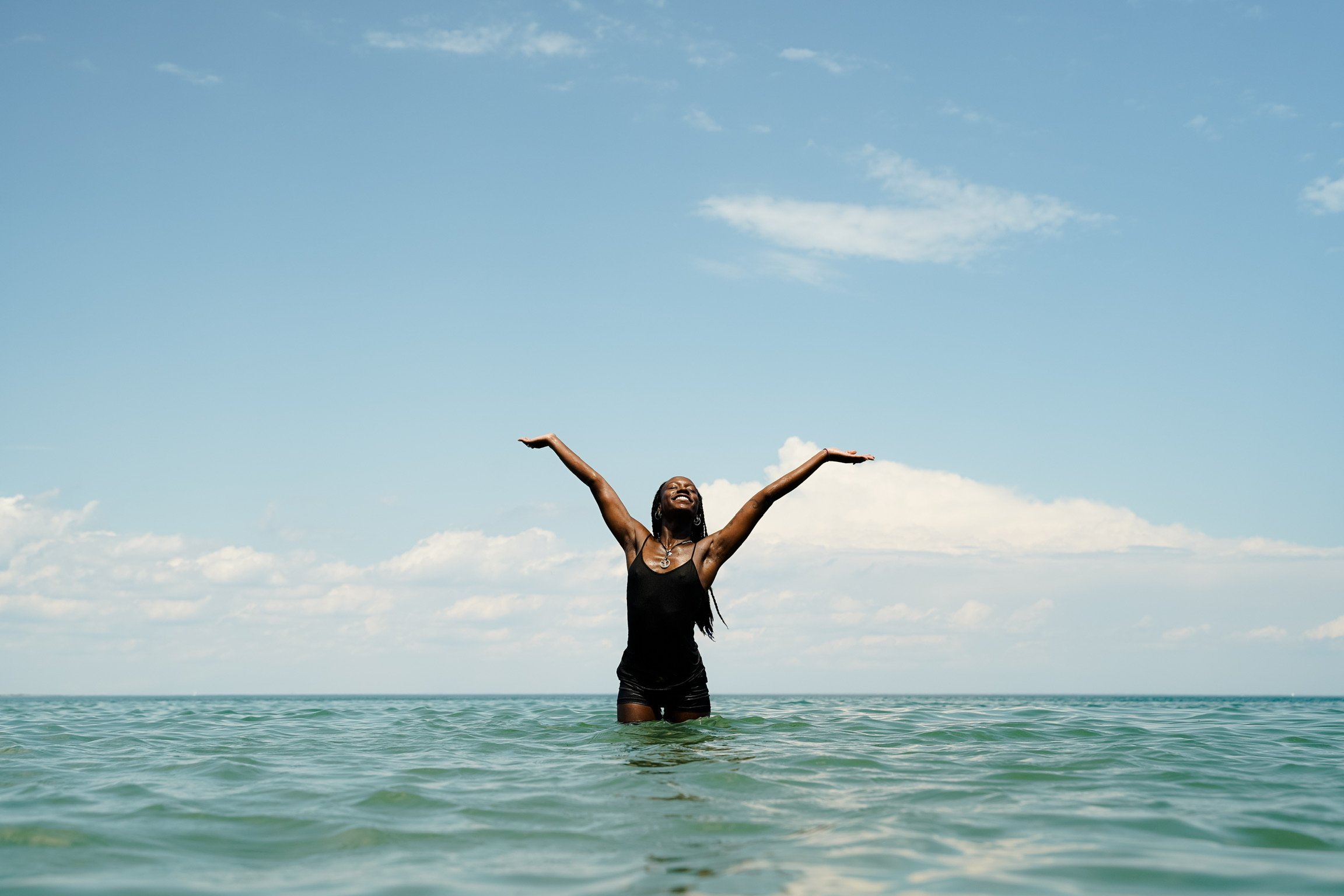
Joye Williams, Hull Resident
“I remember getting to the beach and going straight to my mother’s favorite bench to assess the waves. Looking out at the sea, I could see a long trail of red across the water in perfect view, right in front of her favorite bench.
I thought of her favorite color, and how this was the reddest ocean I’ve ever seen. I know it was from the seaweed, but I felt that the bright red trail was just for me and her. ”
-
“Nantasket Beach has long become a second home to me. It has been a place where my mom took us all our lives, and her mother took her all her life.
Being from Dorchester, my family experienced the vicious and brutal racial violence at close-by beaches like Carson, M street, Tenean, and Malibu. Yet, these spaces also represented survival; I remember catching clams at low tide at Carson Beach.
Even among those unfortunate injustices, my mom never wanted us to feel like we didn't belong. She told me all about the harder experiences as I got older, but only to show how far we've come now. She told me so that I could learn our history and learn how to not back down in the face of injustice.
She described why our family chose Hull and Nantasket Beach as our special place: it is the beach with "no ending," you can see as far as possible across the water. A large, 3-mile, beautiful beach, where I spent my days from as young as when I was still inside my mother’s stomach to an adult creating family traditions and long-lasting memories.
I grew up with pictures of Nantasket's historic Paragon Park around the house. My mother loved roller coasters; we'd go to six flags in Agawam at least twice a year. I always felt that this amusement park at the beach was some myth or beach folklore of what could've been. But the pictures and the still standing Paragon Carousel (one of the less than 100 last standing oldest traditional carousel in the US) proved it was once real. It was fun to think of it as old wives' tale that I’d never get to experience. Never in my life have I imagined a roller coaster on the beach. I doubted I'd ever see it.
2021 was a very hard year. A year of an awful pandemic where I unexpectedly fell seriously ill and had to get brain and open-heart surgery, shortly after my mother unexpectedly got cancer and passed away a few months later.
My Mother and I are very close. She's strong, blunt, silly, adventurous, curious, and resilient. She loves the beach, lays potato chips, popcorn, Miller lite, dancing, peach brandy, reading, history and numbers. Her favorite color is red; she's a Leo and most helpful and loving Person with a BS detector. She saved my life, and her love and strength make me who I am and strive to continue to be.
2022 was the 1st year of losing my mom and celebrating her day without her. I wasn't sure if I could do it. We'd usually always go to the beach for her birthday, but with her gone and family not around I couldn't bear doing it alone.
My friend called me up and asked if I was doing anything or if I needed any support and company. I told her I wanted to try to go to Nantasket Beach, my mom's favorite. She offered to come with me, which made me feel so relieved.
I remember getting to the beach and going straight to my mother’s favorite bench to assess the waves and the vibes. Looking out at the sea, I could see a long trail of red across the water in perfect view, right in front of my mother’s favorite bench. I thought of her favorite color, and how this was the reddest ocean I’ve ever seen. I know it was from the seaweed, but I felt that the bright red trail was just for me and her.
As we got on the beach and started walking, we saw a large sign written on the sand that read " I love Jo Mama" my friend quickly added a "yes" to the end of Jo. The sign now read, "I love Joye's Mama".
Then as the sun set and we gazed upon this brilliant sunset across the water, reflecting warm colors or red, pink, blues, we heard live music playing on the beach. As people danced, I could only imagine how much my mother would've loved it and how we would have danced together, even if we were the only ones. At the same time, we saw some lights in the distance. As I adjusted my sights, I saw that it was a carnival on the beach. We went immediately, where I witnessed amusement park rides, games, and excitedly and in disbelief...roller-coaster. A roller-coaster on Nantasket beach, on July 29th, my mom's first birthday that I spent without her.
I rode the rides and as I sat high in the sky overlooking the ocean, I felt her presence, I remembered her words..."I will always be with you." I believed these words more than ever before. I thanked my mom for showing me these spaces, for shaping them for me, for shaping me for them, and for continuing to show up even when I felt the most that I had lost her.
I'm grateful for that friend. That friend is Maya smith, my coworker, my fellow co-founder, my friend, and my family. She continues to celebrate my mother's traditions and her birthday on Nantasket beach with me each year.”
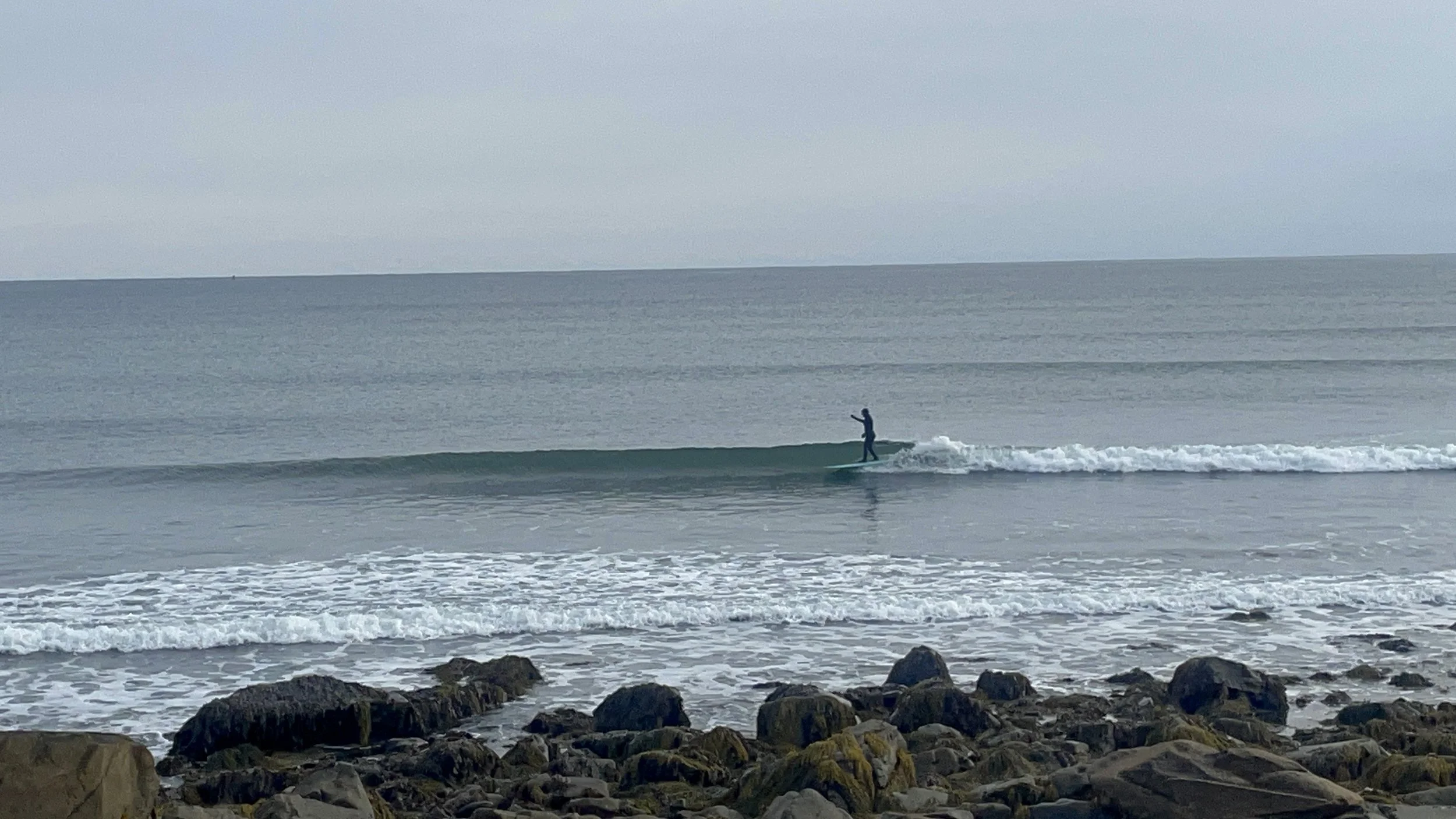
Carmen Maria Osuna, Lynn Resident
“As a surfer, I move with the ocean’s rhythms, and I have felt its instability deepen. Storms grow fiercer, waves less predictable. But the most haunting change is what the sea returns to us: plastic debris and microplastics scattered across the shore after every storm.
The ocean has become a mirror, reflecting the waste of our linear consumption back at us and demanding that we confront the consequences of our neglect.The ocean teaches us this: to protect the coast, we must honor the cycle of matter. Embrace circularity, or surrender our shores to the consequences of linear consumption.”
-
“As a surfer, I move with the ocean’s rhythms, and I have felt its instability deepen. Storms grow fiercer, waves less predictable. But the most haunting change is what the sea returns to us: plastic debris and microplastics scattered across the shore after every storm. The ocean has become a mirror, reflecting the waste of our linear consumption back at us and demanding that we confront the consequences of our neglect.
This crisis is not only ecological, it is psychological. Communities feel the weight of overwhelm and hopelessness. Yet as a specialist in resource management, I see clearly: resilience is not optional. Coastal resilience is an urgent mandate that requires innovation in how we manage the entire flow of materials. To protect our coast, we must go beyond engineering. It calls us to unlearn destructive habits and to practice radical kindness toward the environment. Composting, for example, is not just waste reduction; it is ecological infrastructure. Compost-rich soil acts like a sponge, absorbing and retaining water far more effectively than depleted soil. This capacity reduces runoff, slows stormwater, and prevents erosion, creating a distributed network of resilience across farms, gardens, and public spaces. By holding water inland, composting lessens the burden on rivers and wetlands, strengthening the natural systems that buffer our coasts against floods and storm surges. In this way, the simple act of returning organic matter to the soil becomes a powerful defense against climate-driven instability.
Our priorities must shift toward ecological infrastructure, restoring wetlands and regenerating soils, and toward policies that demand circularity in product design, ensuring materials re-enter the cycle rather than being landfilled or incinerated. The ocean teaches us this: to protect the coast, we must honor the cycle of matter. Embrace circularity, or surrender our shores to the consequences of linear consumption.”
Evan Smith, Lynn Resident
“As a surfer, I constantly see landfills along the shore, some capped and converted into parks or covered with solar panels, but all quietly leaching contaminants into the environment. With Massachusetts’ landfills nearing capacity, we need to dramatically step up our efforts to reduce waste: by cutting consumption, reusing materials, improving recycling systems, and expanding composting.
At the same time, the state must adopt much stricter regulations for all incinerators and landfills, especially aging facilities like this one, to ensure they meet modern environmental and public-health standards. The fewer hazardous sites we rely on, and the more responsibly we manage the ones that remain, the healthier our communities, oceans, and coastlines will be.”
-
“A few years ago, I was surfing at Nahant Beach when I noticed a huge plume of dark smoke rising from a smokestack across Broad Sound. Something was clearly wrong. A sharp chemical odor drifted across the water, and my eyes and nose began to sting.
After my session, I looked into the facility behind the smoke and learned it was WIN Waste Saugus, the oldest trash incinerator in the country. The burner sits in the middle of Rumney Marsh, a designated Area of Critical Environmental Concern. It didn’t take long to learn that the aging plant has a long history of fires, spills, noise violations, and equipment failures. What I saw that day was, in fact, one of those malfunctions. Because the facility is so outdated, it can’t meet modern emissions standards and must purchase credits from other plants to offset its excessive NOx pollution.
Trash incineration is a serious threat to human and environmental health. Burning waste releases toxic air pollutants and produces ash contaminated with arsenic, lead, mercury, dioxins, and other chemicals linked to increased cancer risk, reproductive harm, learning disabilities, immune dysfunction, and more. At this facility, that toxic ash is dumped into an unlined landfill that predates the incinerator itself. Before 1975, the site was simply a municipal dump; when the incinerator was built, they started piling ash directly on top of old garbage. As a result, the landfill lacks the liners and safeguards required of modern sites.
Now, with sea levels rising and storms intensifying, this dump faces increasing risk. It sits in a flood zone, and the surrounding communities have already seen repeated flooding. What happens when a major storm hits an unlined, uncovered ash pile? Where will that contaminated material end up?
The liquid runoff from the ash dump, known as leachate, is pumped to the Lynn Water and Sewer Commission for treatment before being discharged into Lynn Harbor. Many residents worry that the treatment plant is not equipped to remove heavy metals and other toxic elements from this waste stream.
Why does all this matter? Because this is the legacy we’ve built along our coastlines. As a surfer, I constantly see landfills along the shore, some capped and converted into parks or covered with solar panels, but all quietly leaching contaminants into the environment. With Massachusetts’ landfills nearing capacity, we need to dramatically step up our efforts to reduce waste: by cutting consumption, reusing materials, improving recycling systems, and expanding composting. At the same time, the state must adopt much stricter regulations for all incinerators and landfills, especially aging facilities like this one, to ensure they meet modern environmental and public-health standards. The fewer hazardous sites we rely on, and the more responsibly we manage the ones that remain, the healthier our communities, oceans, and coastlines will be.”